Research

My laboratory seeks to understand how allergies develop and how they can be effectively treated by understanding the role of antibodies in allergy and tolerance.

Current Projects

Neutralizing antibodies in oral immunotherapy

Peanut oral immunotherapy, which involves the consistent ingestion of increasing amounts of peanut allergen as a form of desensitization, induced long-term responses in only a small subset of treated individuals. We sought to understand the molecular determinants underlying this induction of sustained tolerance to peanut. Our work has led to the identification of neutralizing antibodies and their role in sustained responses after therapy. These antibodies effectively bind to allergen and block allergic reactions due to their unique structural features. We aim to more fully understand why some individuals are more likely to develop these antibodies than others, and why immunotherapy is more successful at a young age.
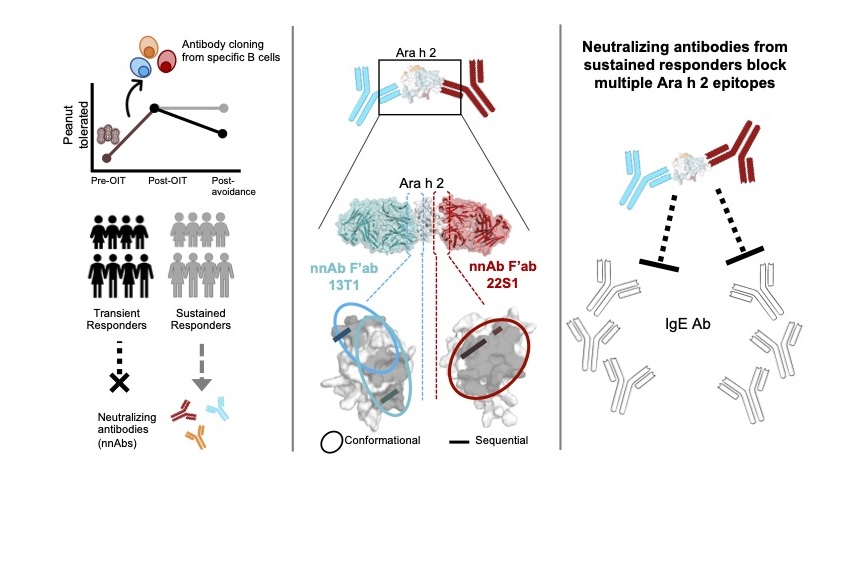
Graphical abstract of neutralizing antibody interaction

Germline-encoded allergen recognition

Combined with deep sequencing approaches, our work also led to the identification of public antibodies to allergens. Using highly homologous, or convergent, antibodies, we probed why healthy humans so frequently develop allergen-specific IgG. Our work identified that almost all humans have antibody genes that can recombine to form antibodies that can bind to peanut proteins with high affinity, even before they undergo any additional affinity maturation. In other words, human antibody genes intrinsically predispose us to develop high affinity antibodies to peanut allergens through multiple redundant pathways.

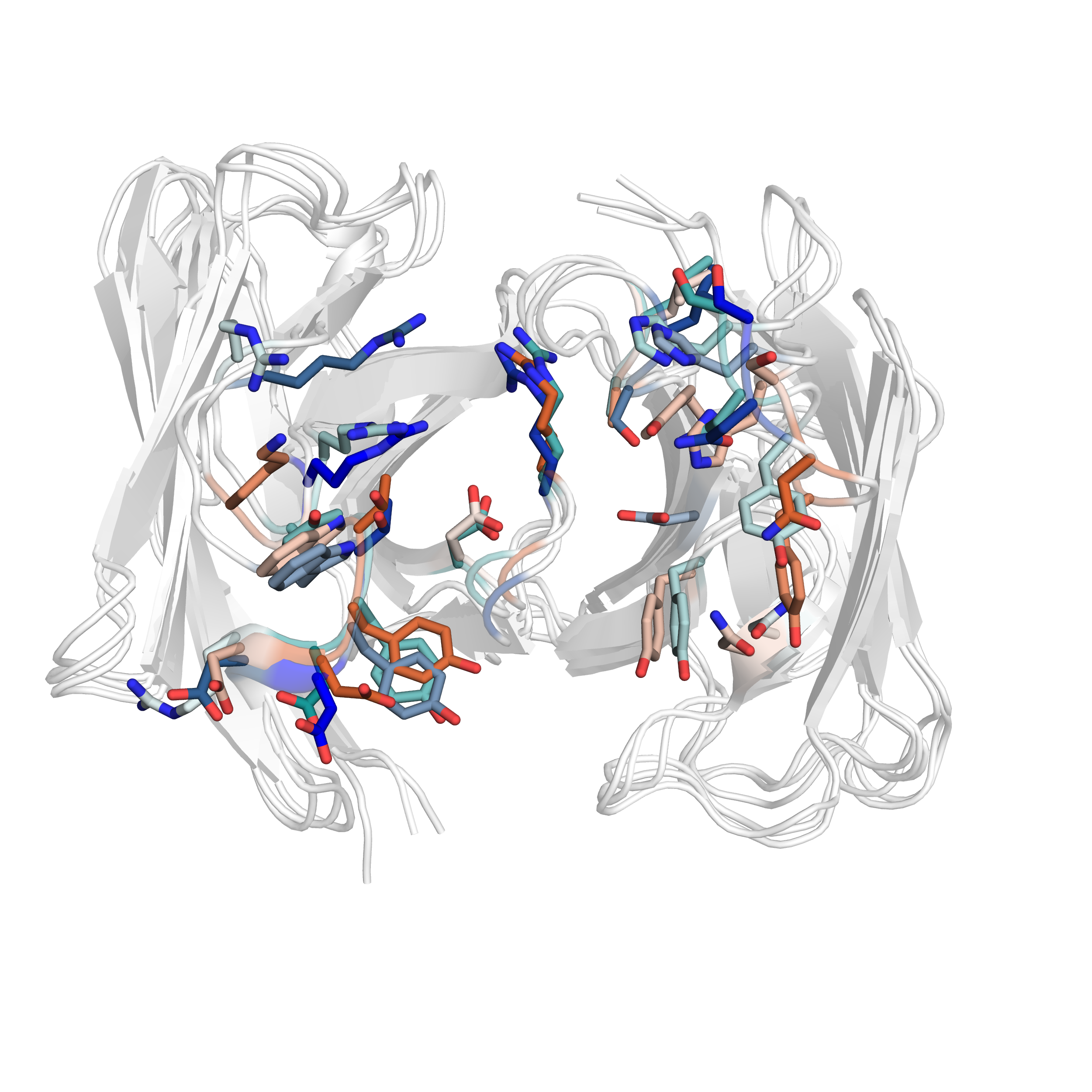
Structural model showing antibody recognition features

Structural convergence of allergen-specific antibodies

We have identified public antibodies that bind to multiple epitopes on the dominant peanut allergen using the same molecular interactions. These antibodies are structurally convergent, with highly stereotyped three-dimensional interactions with the allergen. We seek to use structure to probe allergen recognition on a population level. We are just starting to understand how structural convergence influences immunodominance of particular epitopes on dietary antigens.